Keby sa piesok lial
2025
Sandstone, travertine, granite, silica sand
Name:
Year:
Material:
Dimensions:
100x30x30 cm
/SK
Inštalácia skúma možnosť presunúť rozhodovanie z autora na materiál. Vychádza z myšlienky dať kameňu na výber, nastaviť podmienky, v ktorých výsledok nie je priamo formovaný rukou autora, ale môže sa vynoriť prostredníctvom fyzických vlastností samotného materiálu.
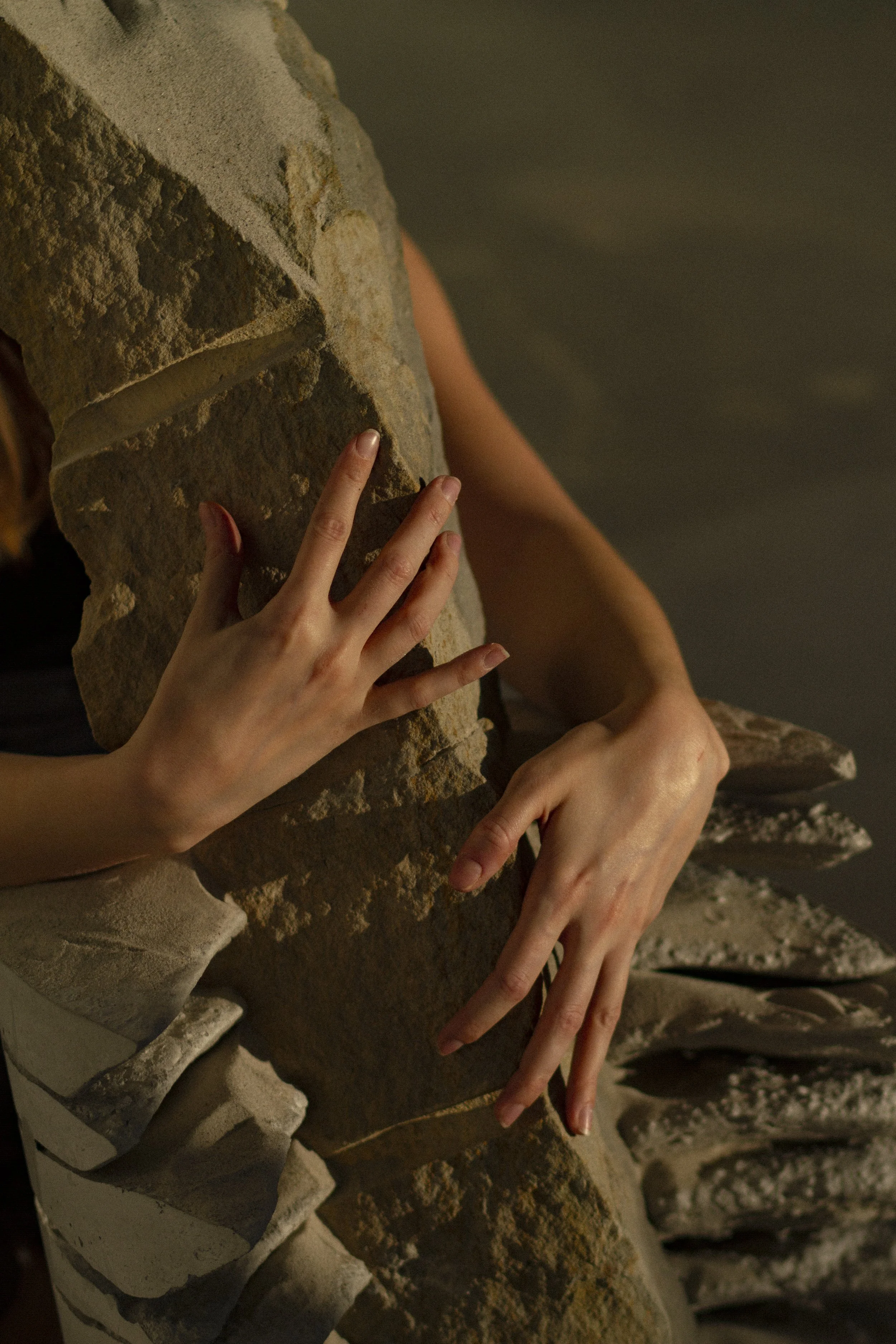
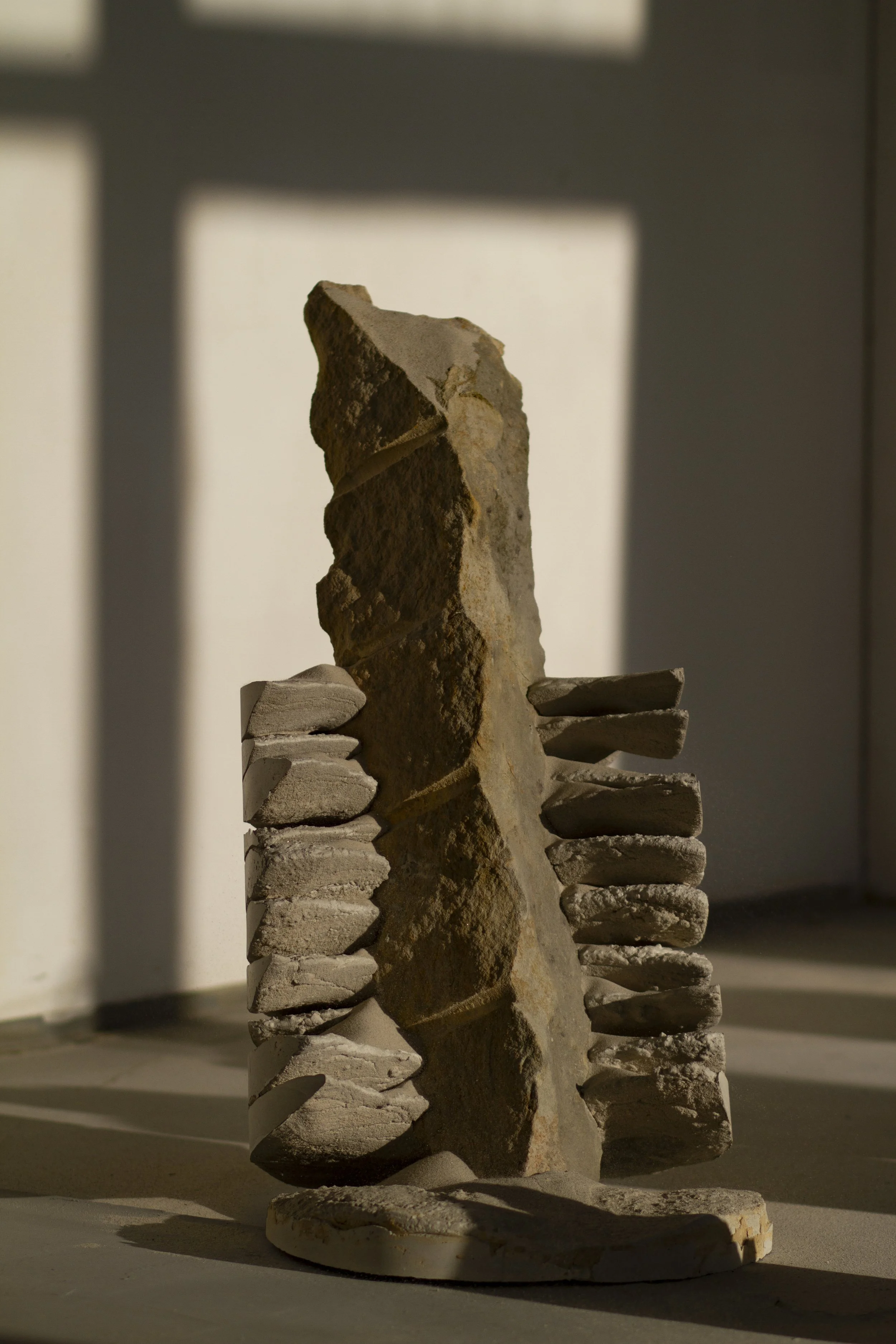
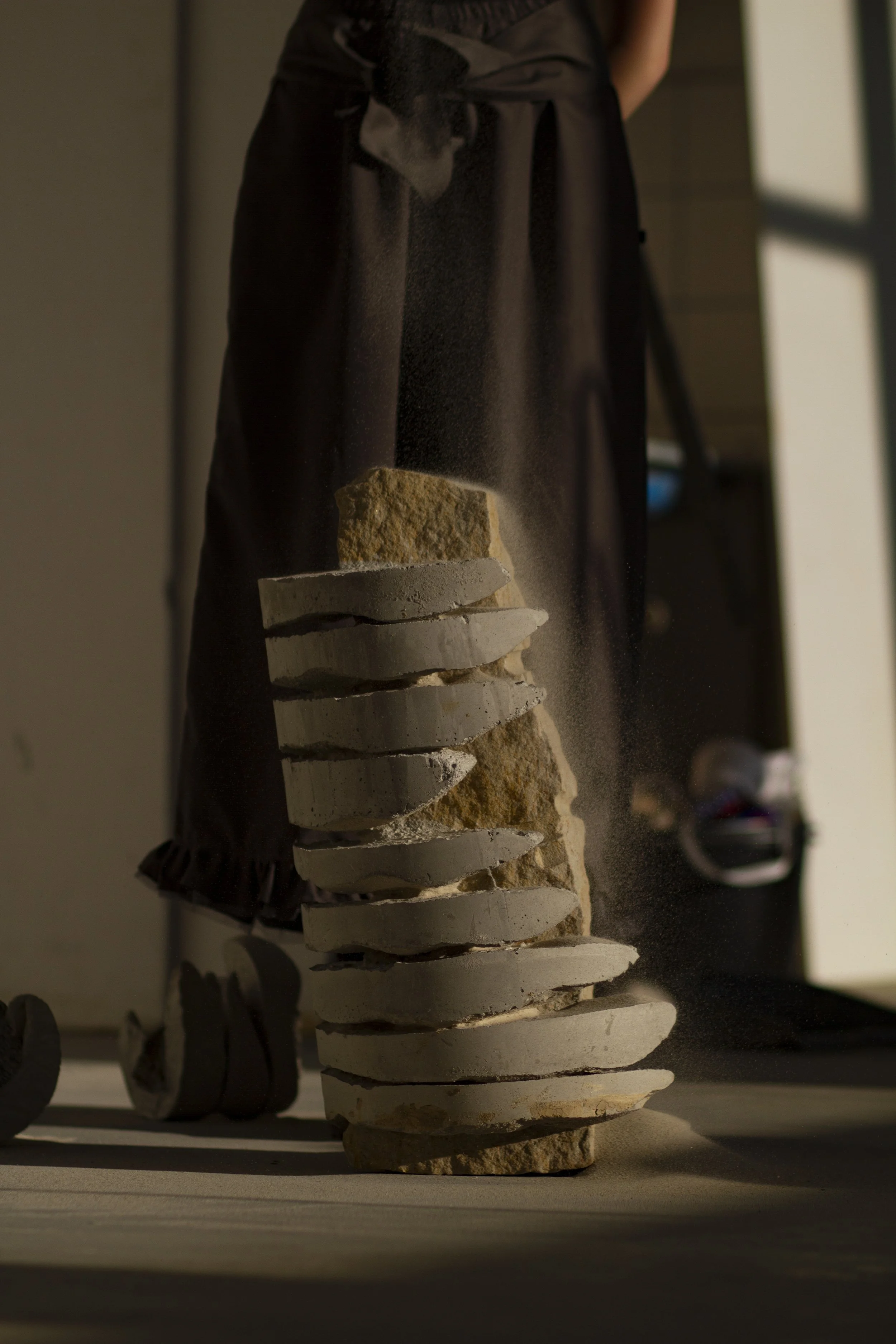
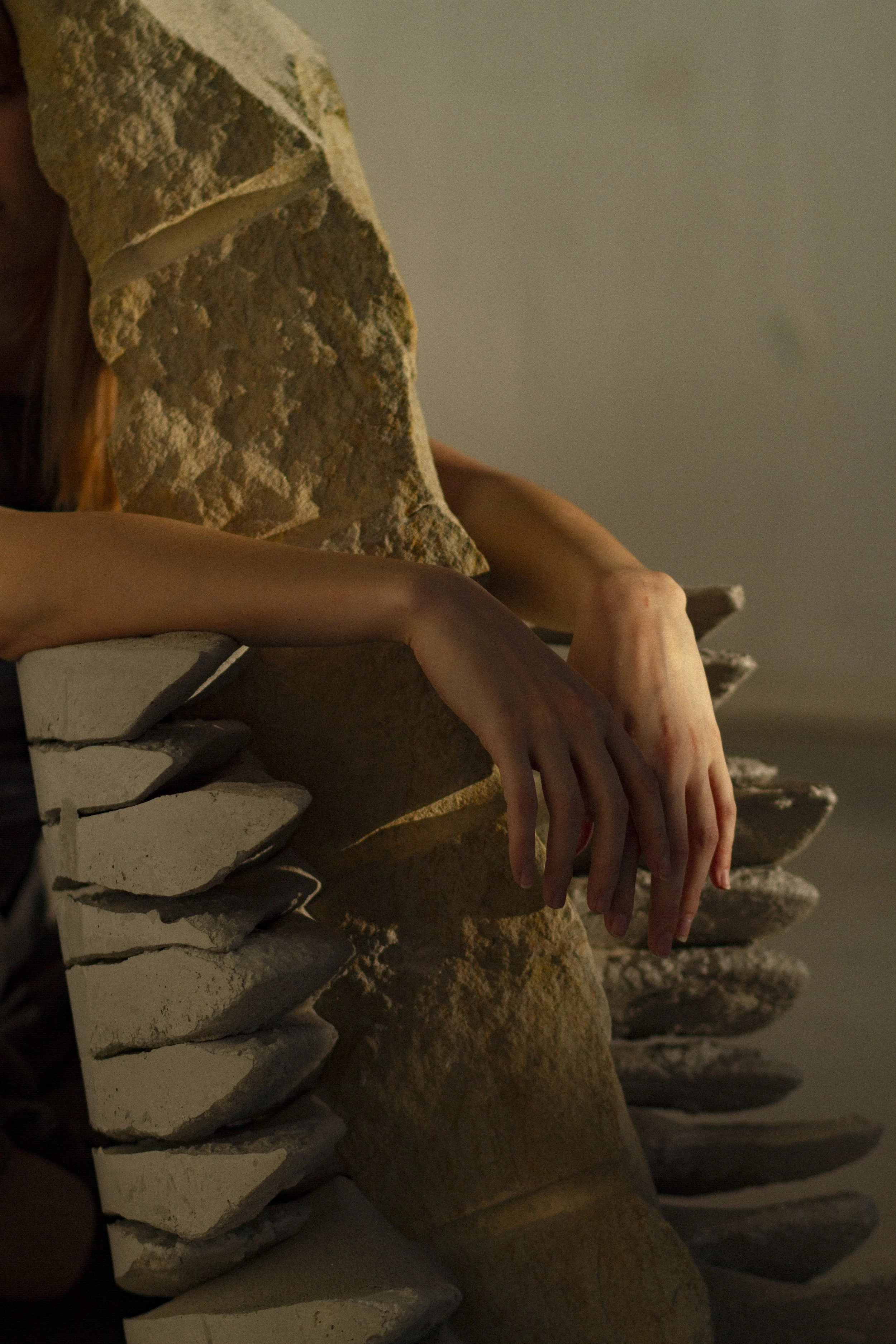
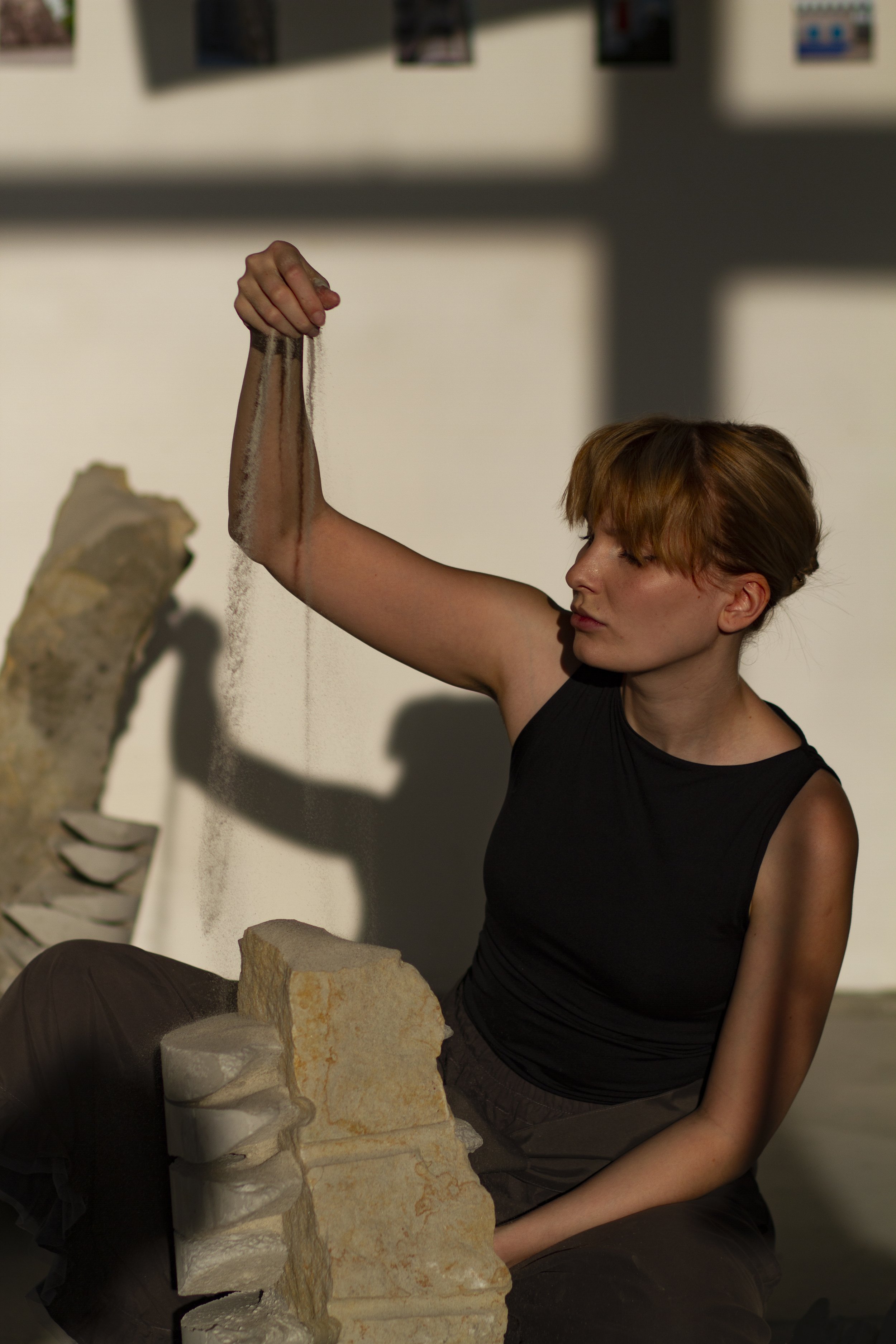
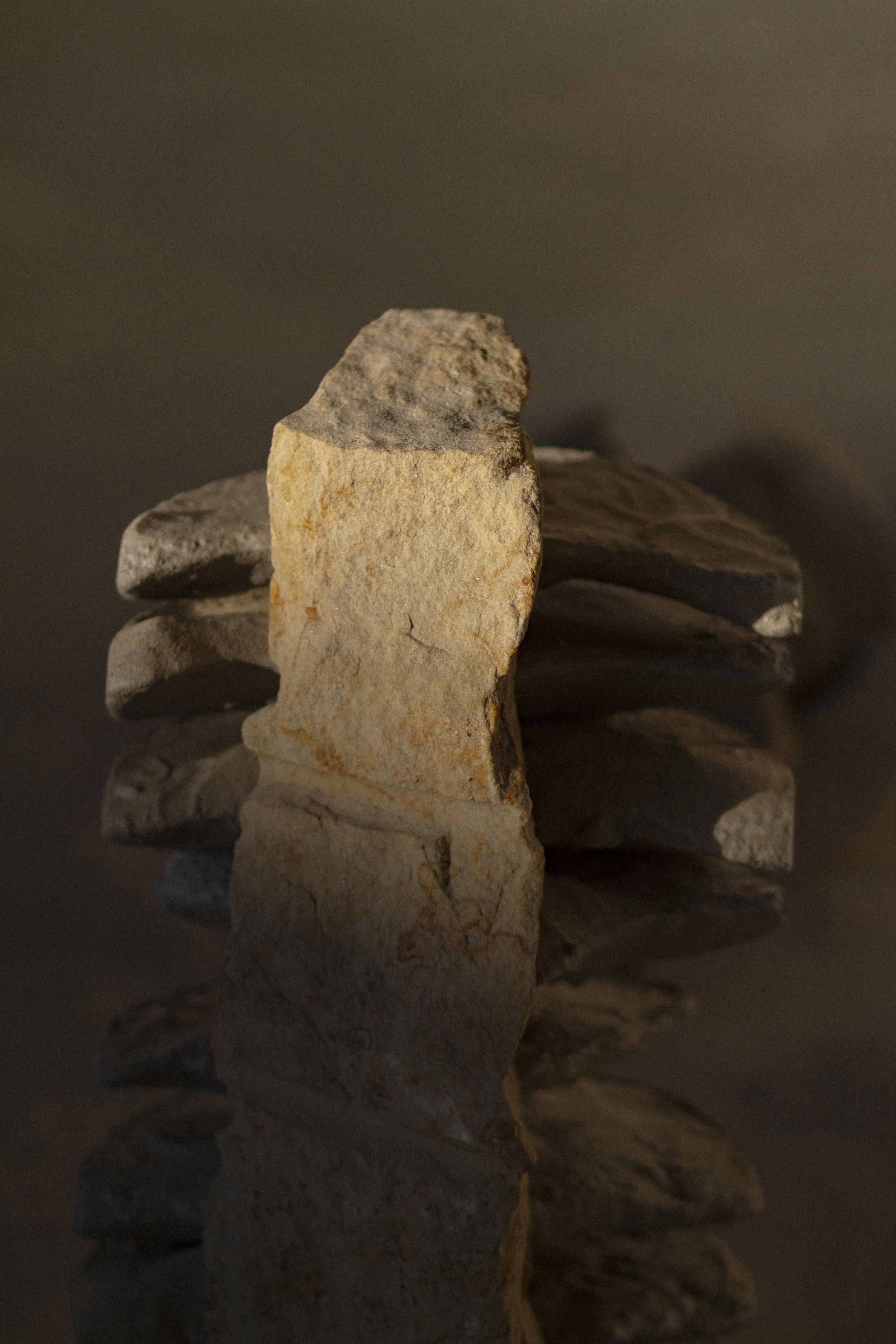
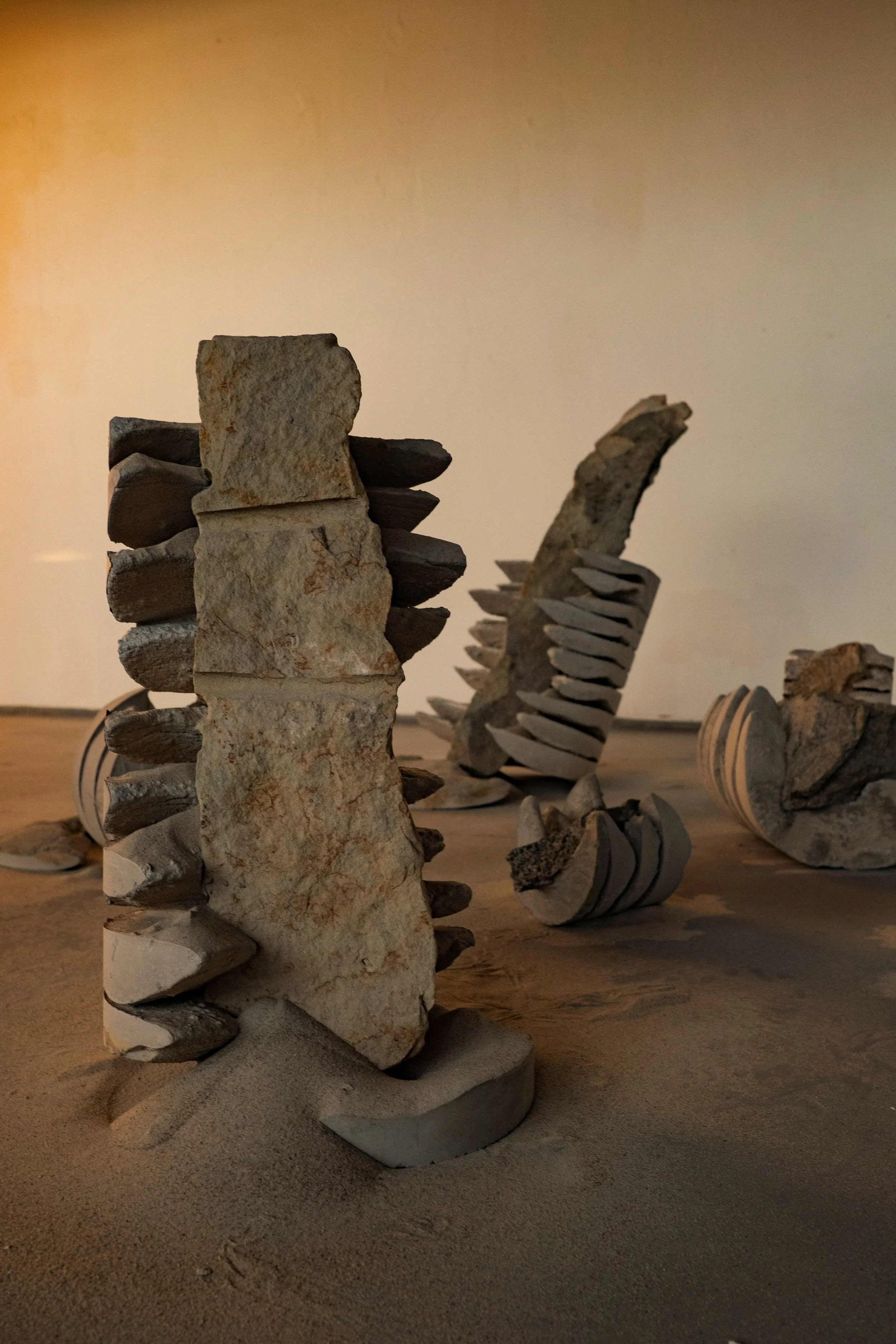
Proces stojí na postupnom vrstvení piesku a betónu v cylindrickej forme. Piesok sa vždy sype na špičku kameňa a poskytuje iba počiatočný impulz. Tvar kameňa následne určuje, kde sa hmota ukladá a kde sa na opačnej strane otvára prázdny priestor. Tento princíp funguje ako situácia voľby, kameň rozhoduje, čo sa odhalí a čo zostane skryté.
Kľúčovú rolu zohráva správanie piesku. Pri sypaní sa rozlieva po líniách, rozptyľuje sa a vytvára kruhový efekt, ktorým prirodzene definuje priestor okolo seba. Tento pohyb je metaforou neviditeľných hraníc, ktoré existujú okolo každého objektu a tela, proxemických zón, osobnej intimity, ochrany aj potreby vystavenia.
Inštalácia sa sústreďuje na priestor, ktorý nie je priamo viditeľný, no je neustále prítomný: priestor medzi tým, čo je skryté, a tým, čo je dovolené vidieť. Vrstvenie sa stáva spôsobom, ako túto nehmotnú dimenziu sprítomniť bez toho, aby bola priamo pomenovaná alebo uzavretá do pevnej hranice.
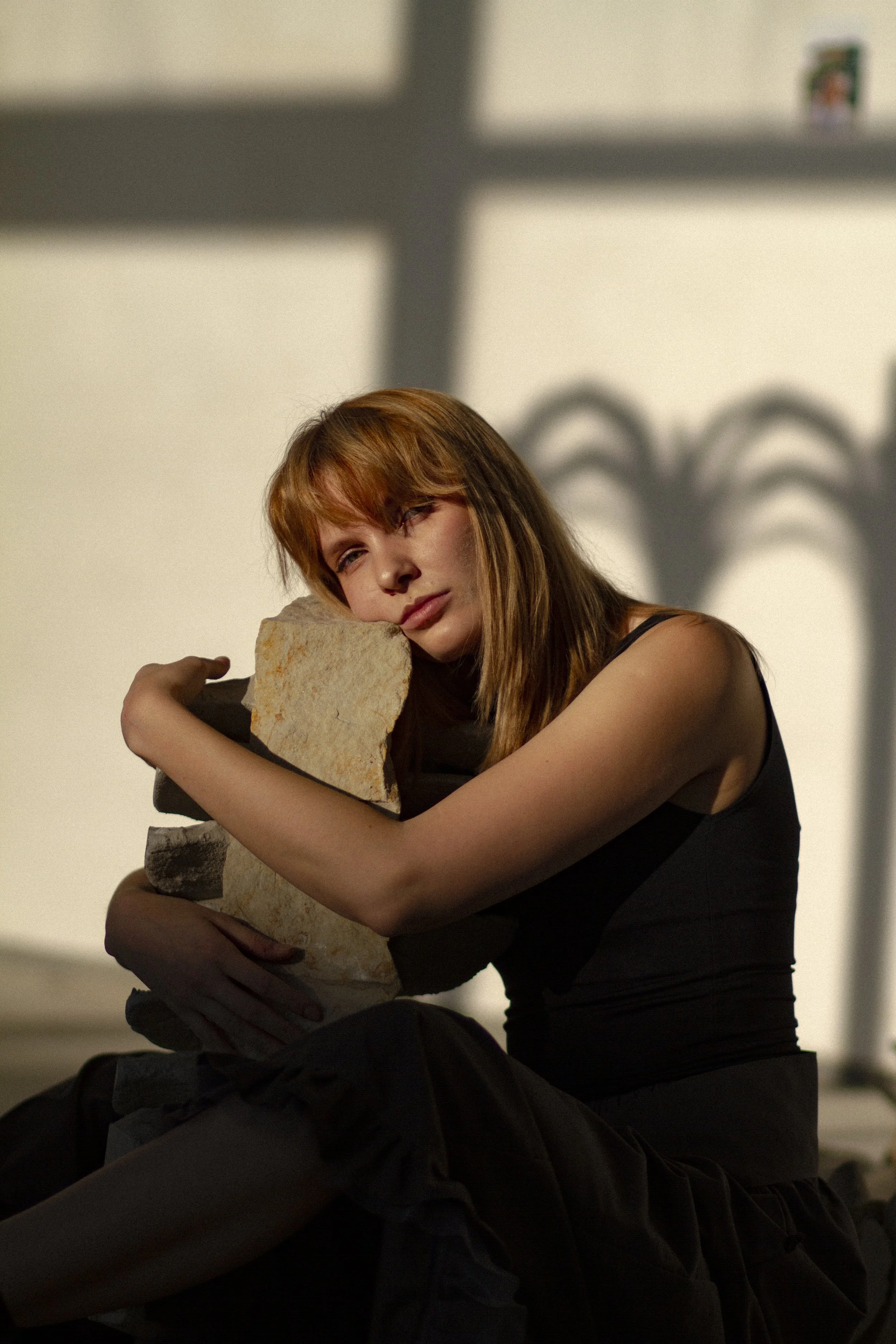
Formálny prístup ovplyvnili moje skúsenosti z Japonska, kde architektúra často definuje priestor skôr vrstvami, rytmom a opakovaním než jednoznačnými hranicami. V tomto diele sa autor mení na iniciátora procesu, nie jeho kontrolóra, materiál preberá aktívnu úlohu pri formovaní tvaru aj samotného priestoru.
/EN
Installation explores the possibility of shifting decision-making from the author to the material. It begins with the idea of giving the stone a choice, setting conditions in which the outcome is not shaped directly but allowed to emerge through the physical properties of the material itself.
The process is based on the gradual layering of sand and concrete within a cylindrical form. Sand is always poured onto the tip of the stone, providing only an initial impulse. The stone’s shape then determines where matter accumulates and where an empty space appears on the opposite side. This principal functions as a situation of choice, in which the stone decides what is revealed and what remains concealed.
The behavior of sand is a crucial part of the process. As it is poured, it flows along lines, disperses, and creates a circular effect through which it naturally defines the space around itself. This movement operates as a metaphor for invisible boundaries that exist around every object and body - proxemic zones, personal intimacy, protection, and the need for exposure.
The installation focuses on a space that is not directly visible, yet constantly present, the space between what is hidden and what is allowed to be seen. Layering becomes a way to make this immaterial space perceptible without directly naming or enclosing it.
The formal approach is influenced by experiences in Japan, where architecture often defines space through layers, rhythm, and repetition rather than fixed boundaries. Within this work, the author becomes an initiator of the process rather than its controller, allowing material to take on an active role in shaping both form and space.